“I don’t know about angels, but it’s fear that gives men wings.”
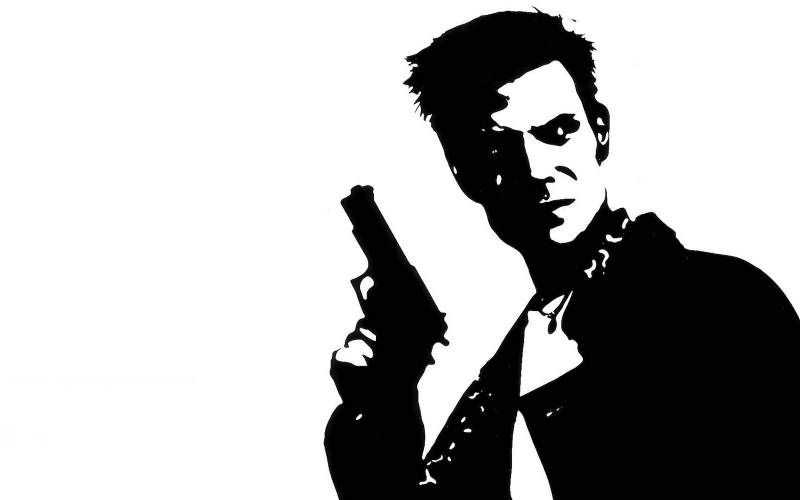
Leon, Tony, James and Karl slo-mo dive – sideways – into their recording seats and review Finnish developer Remedy Entertainment’s second game, 2001’s Max Payne (published by 3D Realms/Rockstar). Mashing up film noir, Norse mythology, Hong Kong action movies and the bullet time made famous by The Wachowskis’ Matrix, Max Payne was one of the most flashy, desirable, and resource-hungry games of the year. In 2002 Remedy sold all franchise rights to Take Two Interactive and made a sequel for them, The Fall of Max Payne (released in 2003) which we also cover here. On top of this your Max Payne-related forum posts and Three Word Reviews. Better still, the film adaptation goes completely unmentioned.
Music used in this show is as follows:
1: Main Theme by Kartsy Hatakka and Kimmo Hajastu
2: Byzantine Power Game by Kartsy Hatakka and Kimmo Hajastu
3: Max Payne 2 Main Theme by Kartsy Hatakka and Kimmo Hajastu
Cane and Rinse 46 was edited by Sean O’Brien
Do you have an opinion about this particular game or maybe about our podcast in general? Then why not venture into our forum and leave us your feedback. Whilst there you could also interact with our ever-growing and friendly community, in discussing past, present and future videogames (and lots of other stuff too!) and perhaps even arrange some games with like-minded individuals. Sound good? Come and say hello at The Cane and Rinse forum
Disappointing sales greeted Max Payne 3, Rockstar’s own take on Remedy’s action franchise, meaning that this may be the last in the series for quite some time at least. But is it any good? Darren Gargette finds out in this PC version Quick Rinse:
Podcast: Download (Duration: 2:10:01 — 89.3MB)
Subscribe: Apple Podcasts | Spotify | RSS



Thanks for another entertaining podcast gents. The podcast brought back memories of playing Max Payne on a high end PC back in 2002 that my now brother-in-law built.
I hated the dream sequences…walking around in pitch black on trails of blood whilst baby cries wrung out is one of the strongest reminders of the MP.
I just wanted to explain the tone of the first game to you guys since I was surprised that none of you really seemed to understand the intention, and it really is one of the more cleverly written video games I have ever played in my life.
Basically the whole thing is a parody on noir tropes and anti-hero stories. Everything is engineered to be as overwrought as possible, and this shows through in the tone of the game (and the intentionally hammy writing/voice acting). Max Payne is designed to be the ultimate tragic hero — so much so as to be absurd. His wife dies, his baby dies, his partner dies, he’s wanted by his own police department; every possible trope is there. It’s silly and you aren’t supposed to take it seriously. They explicitly lampoon this in the second dream sequence, where there is a billboard showing Max smiling with the caption “Everybody I love dies!”. Even Max’s name is a pun on overwrought tortured characters in revenge stories. In this light, the tone is in no way inconsistent — it is darkly comical and self-referential throughout.
I strongly urge each of you to go back and play through the first game with this in mind because there are so many clever touches that you will have missed out on. I can’t think of any video game that is so nuanced in it’s use of these devices and it really deserves to be appreciated as something more than just pulp entertainment.
Thanks for your comments SanguineBrah, much appreciated. I rather enjoyed Remedy doing dark parody in Alan Wake and Max Payne 2, but I find Max Payne 1 to completely miss the mark on almost every level, including that of satirical Noir. There’s absolutely no way I’ll be playing it again I’m afraid as I don’t have time revisit the games I love let alone the ones that I didn’t enjoy in the least the first time round. Even if the ‘gag’ had worked for me the fact is that I found the gameplay to be virtually no fun whatsoever. It’s worth reiterating that Tony, James and Karl all liked the game more than I did.